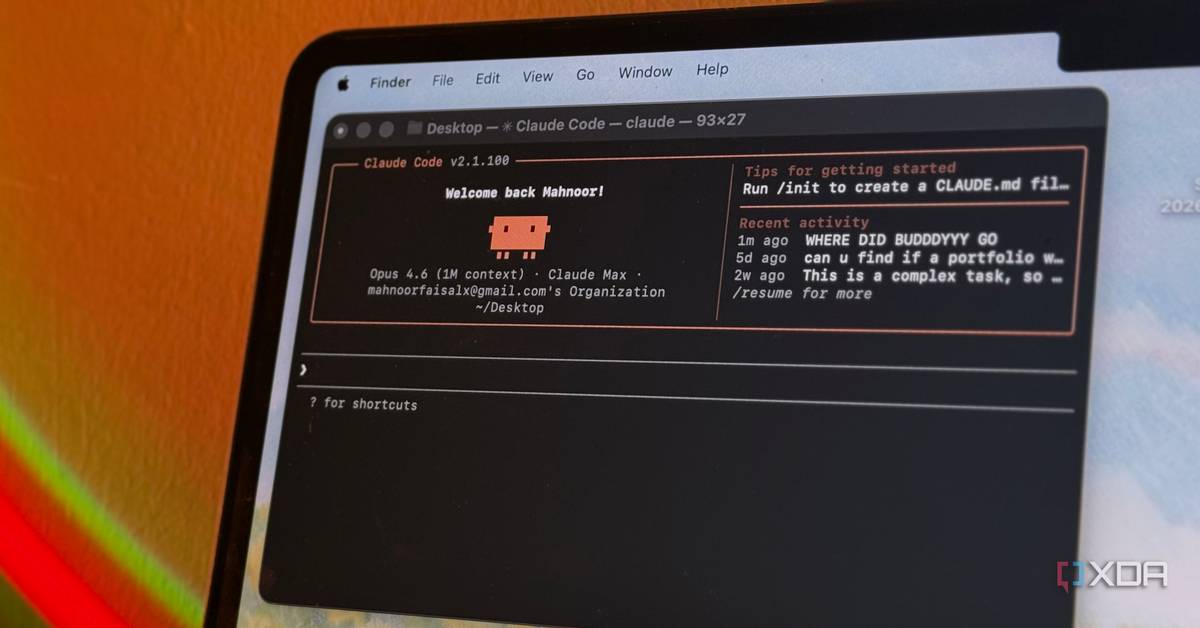

Elon Musk's AI arm xAI has entered the crowded coding-assistant market with Grok Build. The new agent targets developers who already use tools like Anthropic's Claude Code and OpenAI's Codex CLI.
How Grok Build Works
Grok Build runs up to eight AI agents at the same time. Each agent follows a three-step flow: plan, search, and build. The standout feature is Arena Mode, an automatic ranking system that scores each agent’s output before a human sees it.
- Developers receive a ranked list of code suggestions instead of manually comparing them.
- All processing happens locally; no source code leaves the user’s environment.
- Installation uses a standard
npmcommand, and a CLI-based web UI lets teams watch progress in real time.
Model Details and Pricing
The underlying model, grok-code-fast-1, is built from scratch and trained heavily on programming data. Post-training focused on real pull-requests and coding tasks. It scores 70.8% on SWE-Bench Verified and costs $0.20 per million input tokens, a price point that undercuts Claude Code and Codex CLI.
Where Grok Build Stands in 2026
The AI coding-assistant space now looks like a three-way race:
- Claude Code – Anthropic’s flagship, driving $14 B in ARR.
- Codex CLI – OpenAI’s tool, which hit one million developers in its first month.
- Grok Build – New entrant with multi-agent parallelism and local-first design.
Claude Code and Codex CLI still lead in IDE integrations, third-party extensions, and context-window size. Grok Build’s 256K token window trails the 1 M token windows of Claude Opus and GPT-5.4, which matters for large codebases.
Industry Reaction
Mitch Ashley, VP at The Futurum Group, says, "Coding agents are becoming the procurement front where AI labs compete to own the developer workflow. Multi-agent parallelism with built-in evaluation, paired with local-first execution, reflects vendors racing to differentiate on orchestration architecture and execution environment guarantees."
He adds that enterprises now judge tools on orchestration patterns, evaluation pipelines, and where code runs, alongside model performance and ecosystem maturity.
Challenges Ahead
Recent research shows Anthropic’s Claude and Google Gemini gaining traction, while Grok’s growth stalls. Although Grok models briefly topped benchmarks last year, competitors have since reclaimed the lead.
Grok Build remains in early testing and is only available to paying subscribers on a waitlist. A promised launch in early May has not yet materialized, but Bloomberg confirms that broader testing is underway.
What DevOps Teams Should Consider
If you need a proven, production-ready assistant today, Claude Code or Codex CLI are the safe bets. Grok Build could become attractive if it delivers on its promises:
- Multi-agent parallelism for high-volume coding tasks.
- Local-first execution for sensitive codebases.
- Low per-token cost that scales well.
- Arena Mode that cuts code-review time.
For teams that value privacy and cost, Grok Build may carve out a niche. For most, the decision will hinge on how quickly xAI can mature its ecosystem and close the context-window gap.