
Why a Structured Rollout Matters
Companies that jump into AI without a plan often see hype turn into wasted licences. A solid rollout delivers real speed gains and keeps quality high.
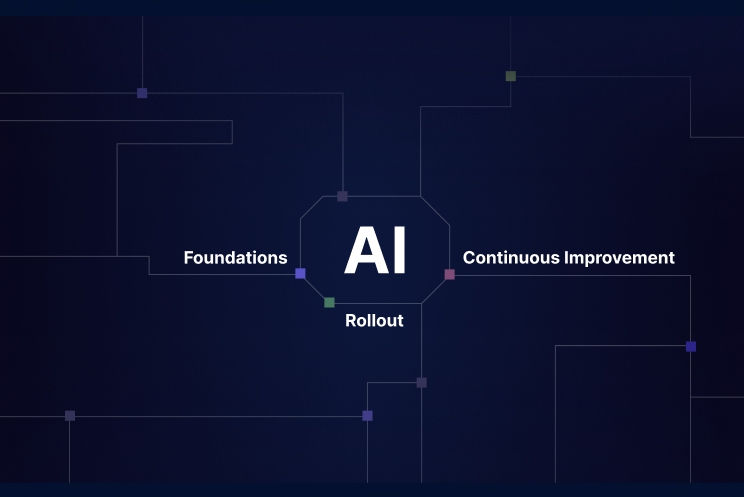
Phase 1 – Lay the Foundations
AI Governance
Start with a clear policy that names approved tools, licensing rules, privacy safeguards and IP protections. The policy should spell out five core principles:
- Accountability – engineers own the final output.
- Fairness – check AI for bias before it drives decisions.
- Maintainability – AI code must be as readable as human code.
- Privacy & Security – data shared with models follows strict retention rules.
- Transparency – flag AI‑generated code to stakeholders.
Solid Delivery Practices
AI amplifies what you already do. If you practice small batch sizes, frequent commits, robust code reviews and automated testing, AI will make those cycles faster. If you have bottlenecks, AI will magnify them.
Key habits to lock in before AI arrives:
- Commit often and keep pull requests tiny.
- Maintain a comprehensive automated test suite.
- Ensure the whole delivery pipeline – from requirements to test environments – runs smoothly.
Documented Coding Standards
Write down the style guide, naming rules and architecture guidelines your team follows. Feed these standards into the LLM’s context (using tools like MCP servers) so the AI knows what “good code” looks like.
Phase 2 – Execute the Rollout
Choosing the Right Tools
Match the AI assistant to the IDE your engineers love. GitHub Copilot works well in VS Code, while Claude Code may fit other environments.
Check two non‑negotiables:
- Data‑security terms – does the vendor keep code private?
- Longevity – can you replace the tool later without losing workflow?
Set up a benchmark suite using a real codebase. Measure:
- Correctness – does the output meet the spec?
- Autonomy – how much rework is needed?
- Quality – readability and adherence to standards.
- Token efficiency – cost of getting a solution.
Role‑Specific Training
AI use is a skill, not a default. Offer hands‑on workshops that cover:
- Prompt engineering basics.
- When to trust AI and when to step out of the loop.
- Team‑specific scenarios – coding, testing, CI/CD.
Keep training alive. New hires, tool updates and evolving models all require fresh sessions.
Phase 3 – Sustain and Improve
Build AI Communities
Form internal forums – Slack channels, Teams groups or regular meet‑ups – where engineers share prompts, success stories and pitfalls. Encourage a “no stupid questions” vibe so knowledge spreads beyond silos.
Define Clear Use Cases
Identify tasks AI does well, such as:
- Automating repetitive refactors.
- Generating boiler‑plate code for well‑defined patterns.
Also mark where human judgment stays essential – security reviews, bias‑sensitive decisions, and novel problem solving.
Track Progress with Metrics
Collect data on delivery velocity and defect rates before and after AI adoption. Aim for higher speed without a dip in quality. Use the same benchmark suite to spot regressions in tool performance.
“AI‑assisted engineering is a continuous journey, not a one‑off project.” – Richard Brown
Bottom Line
Successful AI adoption starts with governance, strong DevOps habits and documented standards. Then pick tools that fit your stack, train teams with realistic expectations, and nurture a culture of sharing and measurement. Keep iterating, and AI will stay a productivity engine instead of becoming shelfware.